
 Wines
Wines


 Enotourism


 Gastronomy


 Events

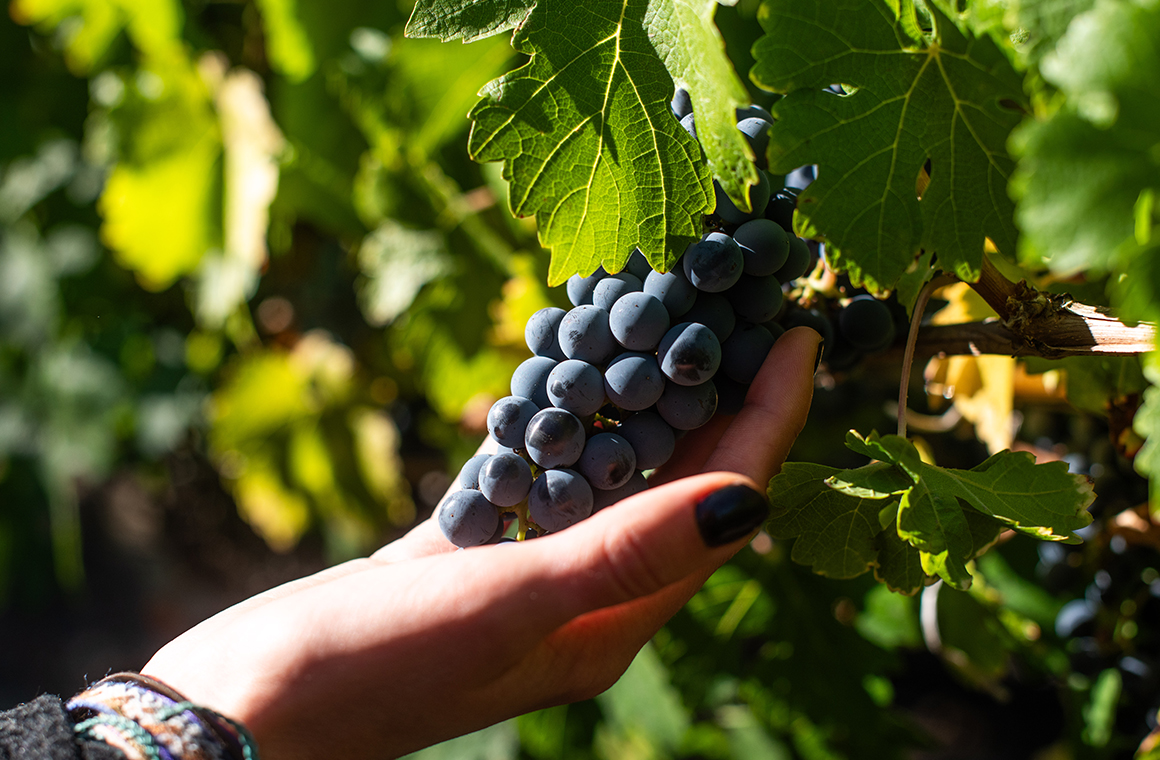
As it does every year, the National Association of Agronomists and Oenologists (ANIAE), commissioned by the Office of Agrarian Studies and Policies (ODEPA), has prepared the First Vintage Forecast Report 2026.
The report aims to provide a preliminary trend on climatic and productive parameters, allowing to estimate the conditions of the sector during the beginning of the 2025-2026 season for each variety in the different wine valleys of Chile.
For its elaboration, ANIAE used the results of a survey carried out during November 2025, addressed to winegrowers and oenologists from all the wine producing areas of the country.
In addition, meteorological information from different national sources was processed, such as the Agro-climatic Situation Bulletins of the Ministry of Agriculture, data from the Meteorological Directorate of Chile, the General Water Directorate and the Agrometeorological Network of the National Institute of Agricultural Research.
Climate, production and health: first signs that anticipate the 2026 harvest
The information covers localities located between the regions of Arica and Parinacota and Aysén, covering the wine-growing sub-regions from the Copiapó Valley to the Osorno Valley.
The document also includes information on the Codpa valley, the Pica oasis, Chile Chico and Puerto Ibáñez - not yet recognised by Decree Law 464 -, with a greater participation of these areas compared with the First Vintage Forecast Report from the previous season.
According to the findings of the report in a first approximation of the harvest, the 2025-2026 season shows a mostly favourable behaviour at national level, indicating good conditions for grape quality and higher production, despite a climatic context dominated by water deficit, warmer temperatures than the climatic average and localised frosts, which resulted in little damage.
Compared to the previous season, the phenological stages were earlier, mainly due to a season under the influence of the La Niña phenomenon.
An increase of 12% in production is also expected at the national level. Various valleys have shown estimated increases of between 10 and 30%, with greater variability in the cooler rainfed areas.
A productive interest in new viticultural areas is evidenced by an increase of up to 60% in Chile Chico, and close to 100% in Chiloé and in the Pica oasis, mainly associated with the entry into production of new plantations.
Throughout the country, survey responses point to a mostly good health status, with occasional cases of powdery mildew in the Elqui and Claro valleys, Margarodes vitis in San Antonio and Casablanca, false red spider mite in the Claro and Loncomilla valleys, as well as grapevine erinosis in the Cautín valley.
In terms of the incidence of pests, damage by wild birds in Codpa, Aconcagua and Itata, as well as by rabbits in the latter two areas, stand out.
The report indicates that the country continues to show decreases in the planted area, with vineyard grubbings mainly associated with low productivity, wood diseases and changes in the productive line. On the other hand, it also points out new plantings concentrated in emerging areas.
The full report, with its executive summary, is available at on the PASO website. More information at @enologosdechile.
Check out our previous content Viña Santa Ema launches its first line of non-alcoholic wines.