 Wines
 Enotourism

 Gastronomy




 Events

Chilean gastronomy is built from various spaces: the kitchens, the classrooms, research, and also the pages where its stories are told.
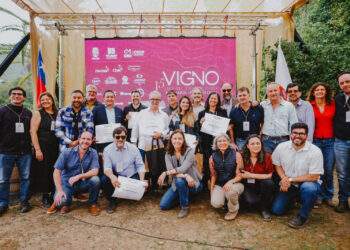
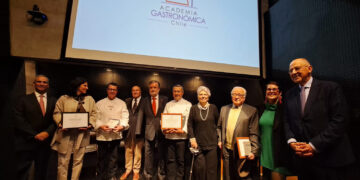
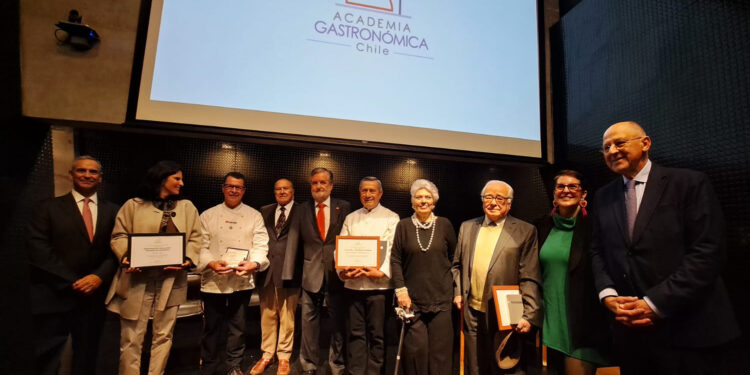
Three of those dimensions were featured in the annual awards ceremony of the Gastronomic Academy of Chile. This distinction was awarded to the journalist Augusto Merino Medina, the chef Guillermo Rodríguez Astorga and the INACAP Gastronomy Area.
The meeting brought together family members, chefs, academics, and representatives of institutions linked to the sector. A day allowed for a tour of the evolution of national cuisine over the last five decades.
The awards were given in the categories of Contribution to Chilean Gastronomic Culture, Personal Achievement and Contribution, and Research, Education and Promotion of Gastronomy.
From domestic cooking to a cultural expression
The president of the Chilean Gastronomic Academy, Bruno Sacco, opened the ceremony with a look at the changes the sector has experienced. He recalled that 50 years ago, national gastronomy was practically a shy whisper. At that time, cuisine remained primarily within the domestic sphere and received little public visibility.
The first School of Hospitality, Tourism and Gastronomy was created at INACAP. New restaurants also emerged and specialized professionals were hired. All of this transformed that scenario.
In his speech, Sacco highlighted the role of those who have driven this evolution from different perspectives, expanding the understanding of cooking beyond the preparation of food.
“Eating is not just about eating: it’s culture. It’s emotion. It’s territory. It’s childhood. It’s community,” she said.
Augusto Merino: gastronomy is also written
The award Contribution to Chilean Gastronomic Culture It was granted to Augusto Merino Medina, known to his readers as Ruperto de Nola, one of the most recognized voices in national gastronomic journalism.
Lawyer, master's degree in Political Science, academic, researcher and writer, Merino has devoted a good part of his career to exploring cuisine from its historical, social and cultural dimensions.
Through his columns and publications, he has brought generations of readers closer to the ingredients, preparations, and customs that form part of the culinary heritage, making gastronomy a topic of reflection and public conversation.
His work has also transcended national borders. He is the emeritus president of the Circle of Gastronomic Critics, in addition to being the co-founder and emeritus vice president of the Gastronomic Academy of Chile, among other responsibilities that have linked him to the Ibero-American gastronomic world.
Upon receiving the distinction, Merino expressed, with his usual humility and sense of humor, that he was very happy and grateful. His family accompanied him at one of the most intimate moments of the ceremony.
Guillermo Rodríguez: five decades paving the way
The recognition of the Career and Personal Contributions fell to the chef Guillermo Rodríguez Astorga. His career has been closely linked to the professionalization of Chilean cuisine and the training of new generations.

A member of the first generation of INACAP chefs, he obtained his degree in International Cuisine in 1976. Subsequently, a United Nations scholarship enabled him to continue his studies at the School of Hospitality in Paris.
Back in Chile, he participated in emblematic haute cuisine projects. He played a key role in the creation of the national chapter of Les Toques Blanches. For 27 years, he chaired that organization.
His work has also been linked to initiatives such as Chilean Cuisine Day and Chilean Wine Day. He has also been involved in scholarship programs aimed at young people interested in pursuing a culinary career.
Upon receiving the award, Rodríguez remembered the chefs who preceded him and called on the new generations to continue on the path they have traveled.
“This award is also for you, because to achieve great things you always need a great team,” he said, thanking his collaborators, colleagues and, especially, his family.
His words also included a mention of his parents, who supported his vocation when pursuing a professional career in cooking was a rare decision.
INACAP: 50 years training professionals in gastronomy
The third distinction, corresponding to Research, Education and Promotion of Gastronomy, was awarded to INACAP's Gastronomy Area, This institution has played a significant role in the development of gastronomic education in Chile.
Over five decades, it has trained more than 45,000 professionals and technicians, many of whom are now working in restaurants, hotels, start-ups, and other areas of the industry, both in Chile and abroad.
Its presence in the 16 regions of the country has made it possible to bring specialized training closer to different territories, incorporating local products, knowledge, and traditions into the learning of new generations.
During the ceremony, the representatives of INACAP highlighted the joint work of teachers, graduates, companies, trade unions and entrepreneurs, as well as the need to respond to the technological changes facing the sector.
In that context, they raised the importance of incorporating new tools without losing what gives meaning to gastronomy: “people and also memory, territories and communities.”.
The Chilean Gastronomic Academy also announced that it will nominate the Gastronomy Area of INACAP for one of the awards that the Ibero-American Academy of Gastronomy awards annually, thus expanding the scope of its training work.
The challenge of recognizing gastronomy as a cultural sector
The ceremony was also attended by the Minister of Culture, Arts and Heritage, Francisco Undurraga, who addressed the need to strengthen the recognition of gastronomy within the cultural sphere.
During his intervention, he emphasized the work of chefs, researchers, and professionals who document and preserve culinary traditions. He expressed the Ministry's willingness to support this process.
One of the challenges posed is to move towards a greater appreciation of Chilean cuisine. This means that “it not only needs to be recognized by critics and experts, but above all by consumers. Because without consumers there is no Chilean food.”.
The reflection closed a ceremony that, through three different trajectories, allowed us to recognize how much national gastronomy has changed. It also highlighted the role that writing, teaching, and the work of chefs continue to play in its development.