De Chile al Paladar | Wine News & Trends in Chile
No results
See all results
  • Wines
    • Wines
    • News
    • Features
    • Sustainability
    • Most read
    Chile Wine Fest 2026 seeks to consolidate itself as a meeting place centered on the culture of wine, bring the wine industry closer to new audiences, and promote moderate consumption. Photo provided.
    News

    Chile Wine Fest 2026 returns with more than 40 wineries, gastronomy, and live music

    Miguel Torres Chile maintains its Gold category in the IWCA after the approval of the 2025 emission inventory. Photo: Courtesy.
    News

    Miguel Torres Chile maintains its Gold category from IWCA

    Carmenère al Mundo is the only international wine competition focused exclusively on the emblematic variety of Chile. Photo: Ruta del Vino Curicó.
    Wines

    ANIAE extends entries for Carmenère to the 2026 World Championships

  • Enotourism
    • Enotourism
    • Experiences
    • Wine Routes
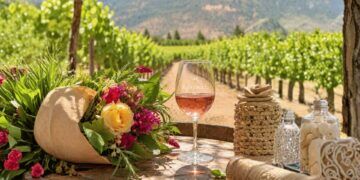
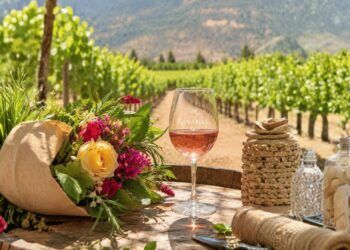
    “The Secret of the Flowers” invites you to discover the role that flowers play among the rows of vines and to end the day with a tasting of Ravanal wines in Colchagua. Photo: Courtesy.
    Enotourism

    Flowers among the straw bales: much more than just a landscape

    Casas del Bosque is strengthening its international strategy as a way to transform every visit into a memorable experience in the Casablanca Valley. Photo: Supplied.
    Enotourism

    Casas del Bosque reinforces positioning in Brazil with wines and wine tourism

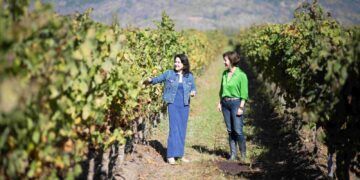
    Women are protagonists in an industry that is starting to have a different face and is also changing the way Chilean wine is understood. Photo: Viña Ravanal.
    Enotourism

    The new face of Chilean wine: women transforming the industry

  • Gastronomy
    • Gastronomy
    • Restaurants
    • Food pairings
    • Spirits
    • Gastronomic Tourism
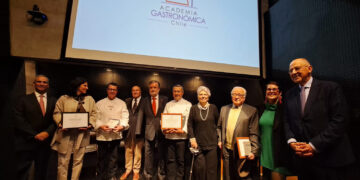
    The Gastronomic Academy of Chile awarded three awards in the categories of Contribution to Chilean Gastronomic Culture, Personal Achievement and Contribution, and Research, Education and Promotion of Gastronomy. Photo: Courtesy.
    Gastronomy

    The Gastronomic Academy of Chile honors three national culinary icons

    Encuentro Quesos opens registration for the Level 1 CheeseMonger Training Programme, which is coming to Chile for the first time.
    Experiences

    CheeseMonger Programme: international certification arrives in Chile

    Mitjans launches its Pistachio Liqueur in Chile, reinforcing its leadership in the sweet liqueurs category. Photo: Supplied.
    Spirits

    Mitjans innovates in flavours and launches its Pistachio Liqueur

  • Events
  • Log in
De Chile al Paladar | Wine News & Trends in Chile
  • Wines
    • Wines
    • News
    • Features
    • Sustainability
    • Most read
    Chile Wine Fest 2026 seeks to consolidate itself as a meeting place centered on the culture of wine, bring the wine industry closer to new audiences, and promote moderate consumption. Photo provided.
    News

    Chile Wine Fest 2026 returns with more than 40 wineries, gastronomy, and live music

    Miguel Torres Chile maintains its Gold category in the IWCA after the approval of the 2025 emission inventory. Photo: Courtesy.
    News

    Miguel Torres Chile maintains its Gold category from IWCA

    Carmenère al Mundo is the only international wine competition focused exclusively on the emblematic variety of Chile. Photo: Ruta del Vino Curicó.
    Wines

    ANIAE extends entries for Carmenère to the 2026 World Championships

  • Enotourism
    • Enotourism
    • Experiences
    • Wine Routes
    “The Secret of the Flowers” invites you to discover the role that flowers play among the rows of vines and to end the day with a tasting of Ravanal wines in Colchagua. Photo: Courtesy.
    Enotourism

    Flowers among the straw bales: much more than just a landscape

    Casas del Bosque is strengthening its international strategy as a way to transform every visit into a memorable experience in the Casablanca Valley. Photo: Supplied.
    Enotourism

    Casas del Bosque reinforces positioning in Brazil with wines and wine tourism

    Women are protagonists in an industry that is starting to have a different face and is also changing the way Chilean wine is understood. Photo: Viña Ravanal.
    Enotourism

    The new face of Chilean wine: women transforming the industry

  • Gastronomy
    • Gastronomy
    • Restaurants
    • Food pairings
    • Spirits
    • Gastronomic Tourism
    The Gastronomic Academy of Chile awarded three awards in the categories of Contribution to Chilean Gastronomic Culture, Personal Achievement and Contribution, and Research, Education and Promotion of Gastronomy. Photo: Courtesy.
    Gastronomy

    The Gastronomic Academy of Chile honors three national culinary icons

    Encuentro Quesos opens registration for the Level 1 CheeseMonger Training Programme, which is coming to Chile for the first time.
    Experiences

    CheeseMonger Programme: international certification arrives in Chile

    Mitjans launches its Pistachio Liqueur in Chile, reinforcing its leadership in the sweet liqueurs category. Photo: Supplied.
    Spirits

    Mitjans innovates in flavours and launches its Pistachio Liqueur

  • Events
No results
See all results
De Chile al Paladar | Wine News & Trends in Chile
No results
See all results
  • Wines
  • Enotourism
  • Gastronomy
  • Events
Home In-depth

Aires de Menetúe: making wine where there was none before

In Pucón, and with practically no script, tourism businessman Eugenio Benavente set out in 2014 to make wine in a region without a winemaking tradition. Three years later, winemaker María Paz Valenzuela joined to take charge of the technical direction of a project marked by the southern climate, the mountain range and an innovative thermal water system to combat frosts.

Cristy Álvarez By Cristy Álvarez
22/09/2026
At In-depth, Features, Wine Routes, Wines
Reading time: 7 minutos
A A
0
Aires de Menetúe: eight years of trials, climatic challenges and decisions made on the fly have shaped one of southern winemaking's most unique projects. Photo: Nick Charlesworth.

Aires de Menetúe: eight years of trials, climatic challenges and decisions made on the fly have shaped one of southern winemaking's most unique projects. Photo: Nick Charlesworth.

Share on FacebookShare on Linkedin

When Eugenio Benavente, the driving force behind Aires de Menetúe in Pucón, decided to plant the first Chardonnay and Pinot Noir vines in 2014 within the Menetúe Thermal Park, he did so in a region with no winemaking history and where climatic conditions posed, from the very beginning, more questions than certainties.

In 2017, the oenologist María Paz Valenzuela joined the project, taking over its technical management. After studying the conditions of the site, the vineyard was expanded to reach one hectare, increasing the presence of Chardonnay and incorporating Pinot Meunier, a variety closely linked to the production of sparkling wine in Champagne.

Since then, part of his work has consisted precisely in interpreting a place for which there was not too much prior winemaking experience to rely on.

And there was a condition of the place that would end up transforming into an essential part of its identity. Aires de Menetúe, which is part of the attractions of the nascent La Araucanía Wine Route, is located within a thermal park and uses its thermal waters through a network of micro-sprinklers installed over the vineyard to protect the buds from spring frosts, one of the most sensitive moments of the season. Thus, the project presents itself today as the “World's first thermal vineyard”.

The recent opening of their own winery therefore marks quite a bit more than the launch of a new wine tourism facility, as it makes it possible to complete the cycle within the same territory: cultivating, harvesting and finally winemaking in Pucón. For Valenzuela, this possibility strengthens the connection between the place, the wines and those who come to experience them.

“Being able to vinify at the place of origin makes our wines stand out for the consistency achieved in connecting the environment, the wines, and our visitors.
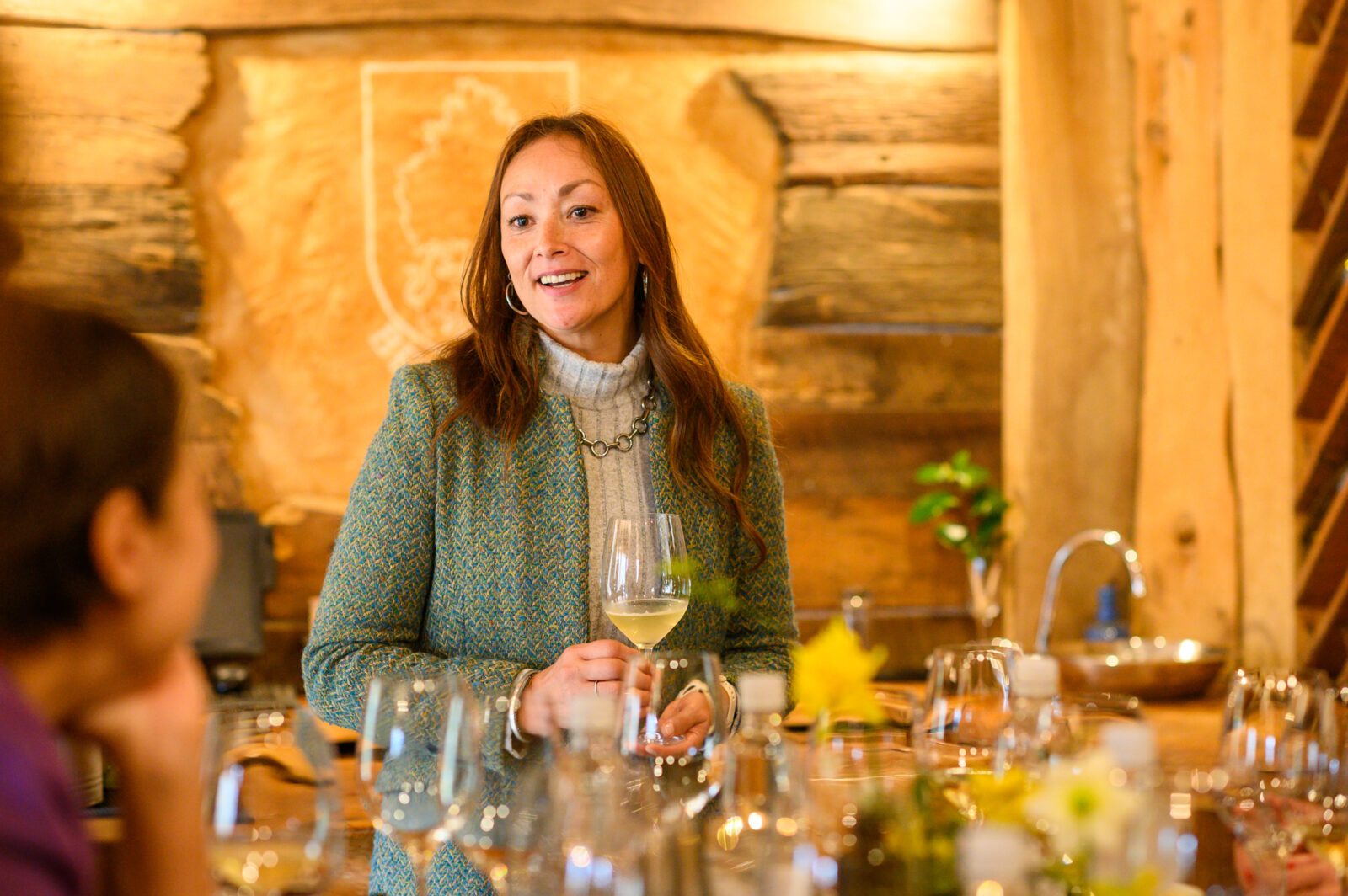
María Paz Valenzuela, winemaker who has been leading the Aires de Menetúe project since 2017. Photo: Nick Charlesworth.

“A work still in progress”

After so many years of work, what does it mean to you as a winemaker? You have been with the project since its early years. Inaugurating the Aires de Menetúe winery and opening this space to the public represents an achievement for everyone.

After 8 years of trials, challenges and continuous learning, the opening of our winery means, in addition to having a space that brings together all the necessary characteristics to craft our wines consciously and on-site, it is also the consolidation of a work that is moving forward step by step, which is still in the process of maturing, but which has an increasingly distinct identity.

Getting here, however, has meant resolving difficulties very different from those of more established wine-producing valleys. A good portion of the inputs needed for winemaking and bottling come from the central region. Producing on a small scale limits the possibilities of negotiating by volume, and the southern climate remains challenging.

Valenzuela describes the vineyard, at eight years old, still in the stage of “calibration”. Pruning, general plant management and other decisions continue to be subject to analysis and trials. The results are becoming increasingly accurate.

“The vines are starting to define themselves, but always with the awareness that there is still more to discover. And that makes it very entertaining.
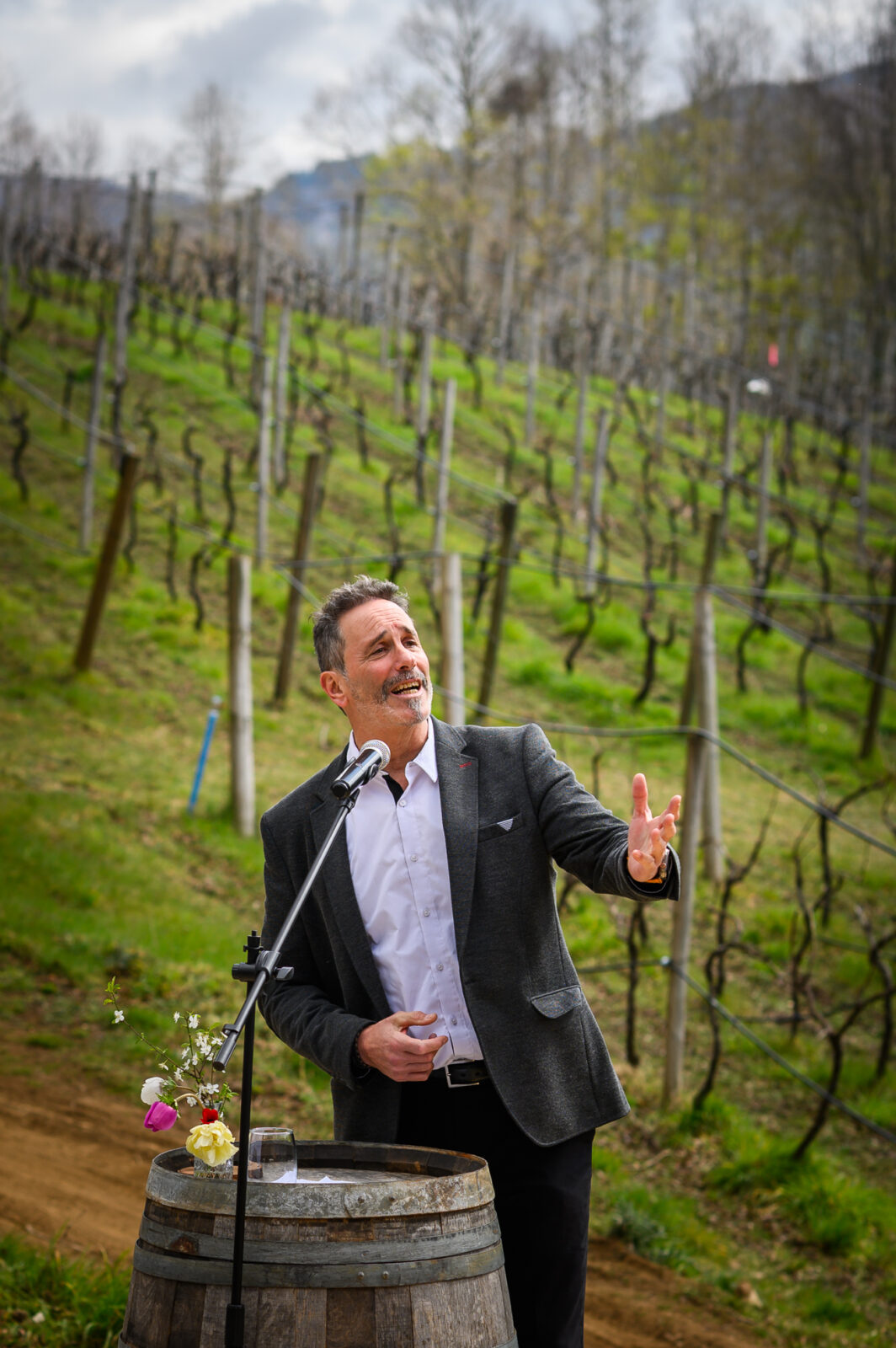
Eugenio Benavente, owner of Aires de Menetúe and CEO of Patagonia Andina. Photo: Nick Charlesworth.

A wine that tries to taste like Menetúe

For now, Aires de Menetúe maintains a limited scale. The vineyard has not yet reached its expected productive potential and, although the work has steadily consolidated, growth does not appear as an immediate goal.

The expansion will also depend on the response of those who visit the project and, for now, the commitment is to maintain a particular characteristic: that it is on their own premises where people can experience their wines.

In the cellar, the search follows the same logic. The minimal intervention it is the focus that Valenzuela brings to his winemaking work and behind every bottle there is the intention to convey something more than just a variety or a style.

“Minimal intervention is the focus as a winemaker, and I emphasise that every bottle is unique and the idea is that you can taste the hot springs, the forest, the volcanoes, the lagoon, the Andean Patagonia.

“The environment gives our wines their personality”

If you had to describe the personality of the wines born in Aires de Menetúe, what would you say are their main characteristics? What does this territory —its climate, its volcanic soils, and its mountain location— contribute to the wines?

The environment gives our wines their personality. Although we can already speak of a characteristic Menetúe profile, something perceived in the comments of those who have visited other vineyards in La Araucanía, weather dynamics are the main factor that defines them year after year.

The acidity of our Chardonnay is a very distinctive characteristic compared to others of the same grape variety and from more central valleys. Fresher, generally more citrusy wines, with a lower alcohol content, are part of what represents us as a region today.

The same goes for our sparkling wines. Unlike further north, where harvesting is done very early to preserve acidity during the second fermentation.

Many times this gives rise to less complex wines, our reality is very different. In Champagne, France, harvesting is done later, to achieve the ripening of grape compounds that deserve to be expressed in every bottle, without losing the natural acidity. Something very similar to what happens in Pucón.
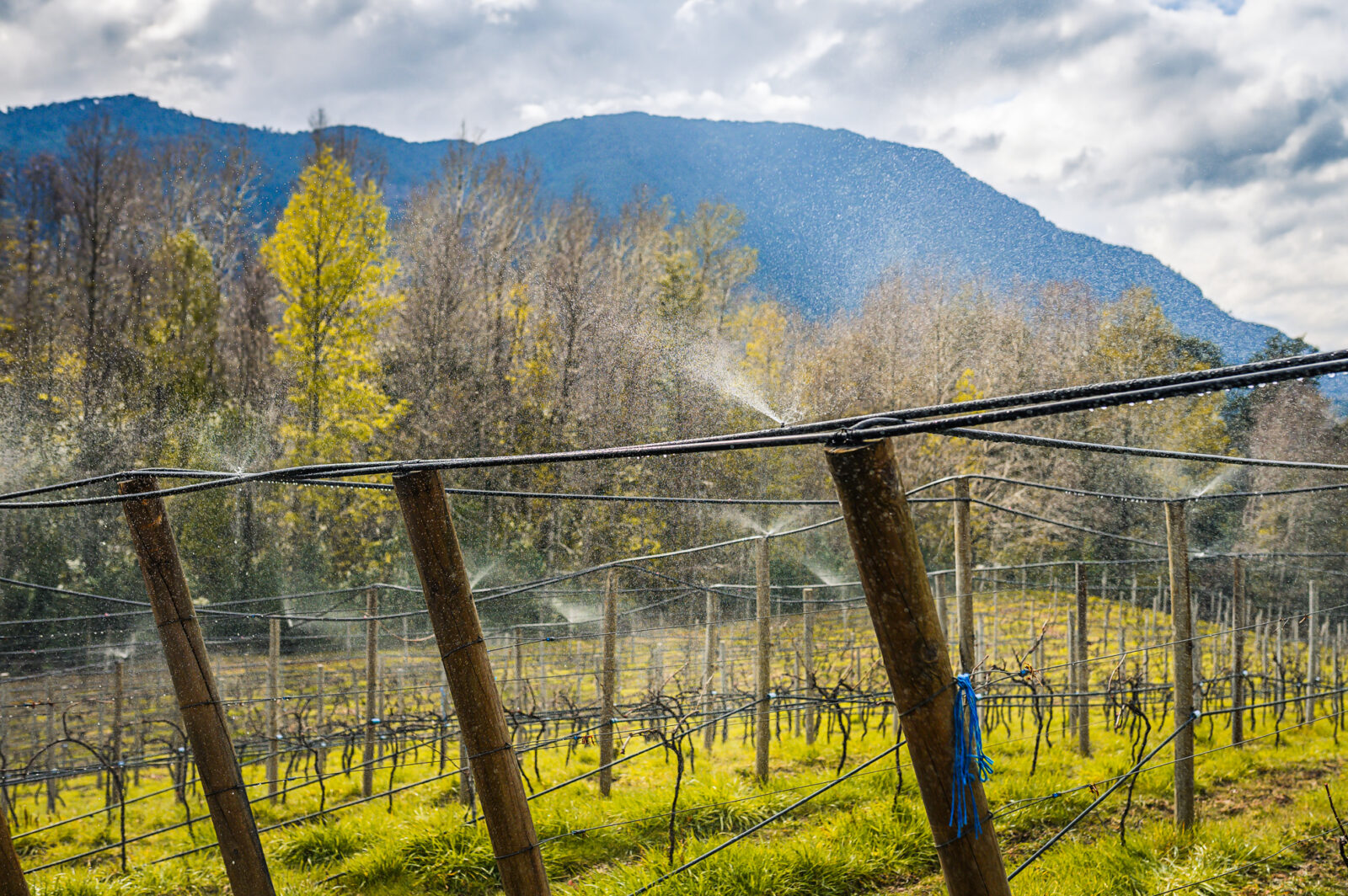
Aires de Menetúe uses a system fed by thermal waters, via micro-sprinklers that generate a constant rain over the vines, preventing the shoots from freezing in spring. Photo: Nick Charlesworth.

Lower-alcohol wines: an opportunity with reservations

The recent amendment to Chilean regulations on lower-alcohol wines introduces a discussion of particular relevance to the southern territories.

In the conversation, Valenzuela argues that the minimum alcoholic strength had precisely been one of the obstacles to production in these valleys. But his perspective on the change also includes a warning: opening up new productive possibilities should not, in his view, mean indiscriminate relaxation.

Recently, Chilean regulations incorporated a new category for products made from grapes with an alcoholic strength starting from 8.5°. In the south of Chile, climatic conditions can produce wines with a lower alcoholic strength. How do you perceive the modification and what opportunities do you see for new wine-growing regions?

This regulation in our region, and further south, has always been a concern on the table. One of the main stumbling blocks to producing in these southern valleys has been the issue of the minimum alcoholic strength (11.5).

But I think I speak for several when I say that it shouldn't be a widespread regulation. While the underlying idea is to open up to new markets (thinking about the global drop in consumption), we cannot risk losing quality for the sake of boosting graphics.

Chile has had a very difficult path to get among the best in the world. Ideas like these are the ones that put at risk our heritage and image, which has taken us so much effort to strengthen.

I consider it essential to have public spaces for debate, featuring industry players who already have the experience and the voice to contribute clear and constructive ideas.
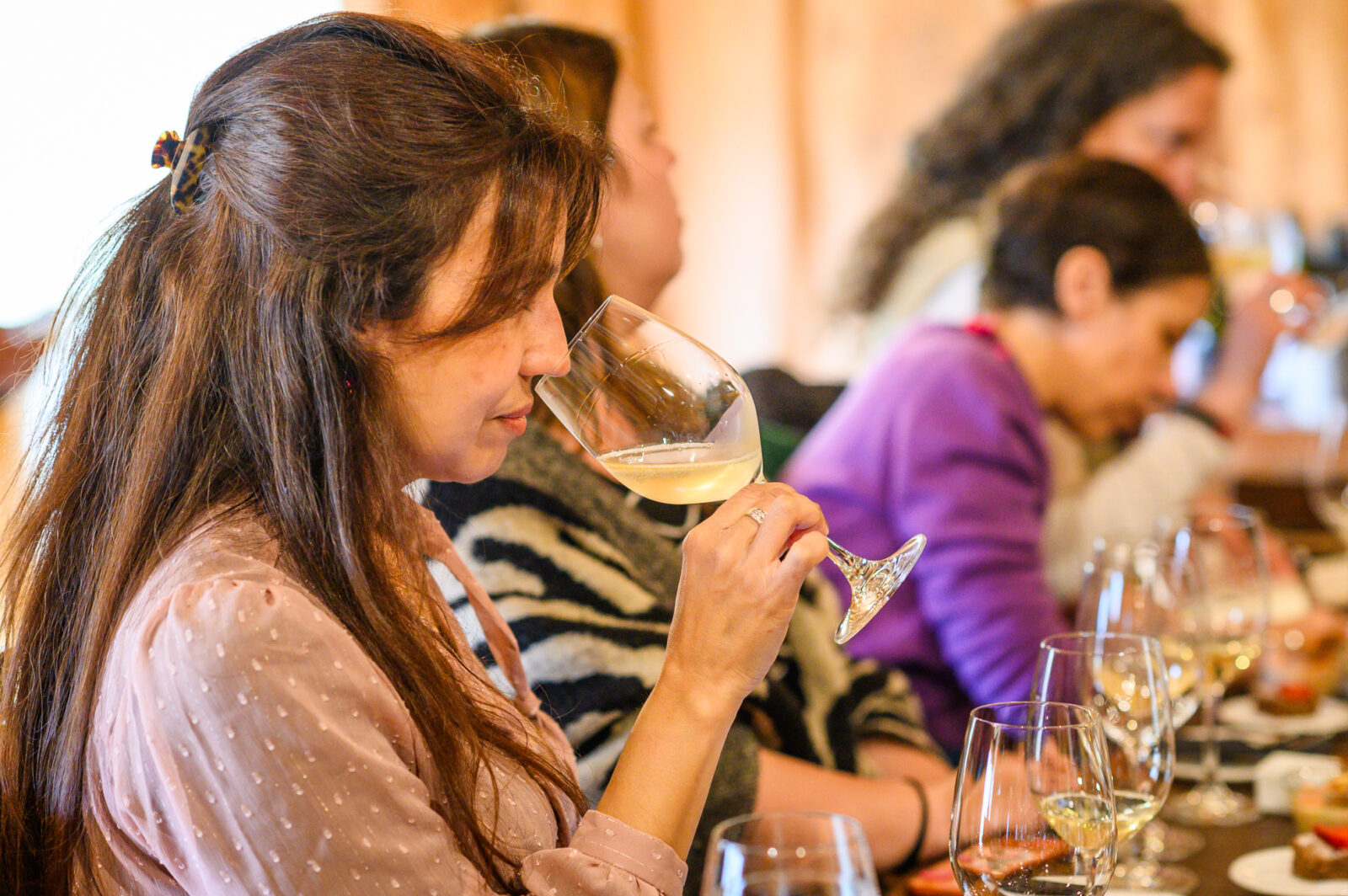
The exponents crafted from Chardonnay and Pinot Meunier belong to Chile's southern wine-growing region, and originate just 50 km from the border with Argentina. Photo: Nick Charlesworth.

From the central valley to Pucón

Maria Paz Valenzuela's career helps to understand the winemaking philosophy she currently brings to Aires de Menetue. As an agronomist with a specialisation in oenology from the University of Chile, she carried out her first harvest in 2003 at Casa Lapostolle, when Michel Friou was technical manager, a professional whom she recognises as a key mentor in her decision to build a career in this field.

This would be followed by a grape harvest in Sonoma Valley, California, and experiences in other non-traditional valleys in the United States. In Chile, his career includes Viña Errázuriz, during the period when Francisco Baettig was technical manager, and Viña Santa Rita, with Andrés Ilabaca in that role. To this he adds technical tours of Italy, France and Spain.

In 2017 he settled in Pucón and in 2018 the replanting of Aires de Menetúe was carried out. The project also ended up reinforcing a professional concern that Valenzuela recognises as his own: working on small-scale initiatives, closely related to his place of origin and where vineyard and winery can be understood as parts of the same process.

“This project has been key to strengthening my desire to work on small-scale, local projects, where working in the vineyard and in the winery at the same time has allowed me to understand the terroir of the place much better.
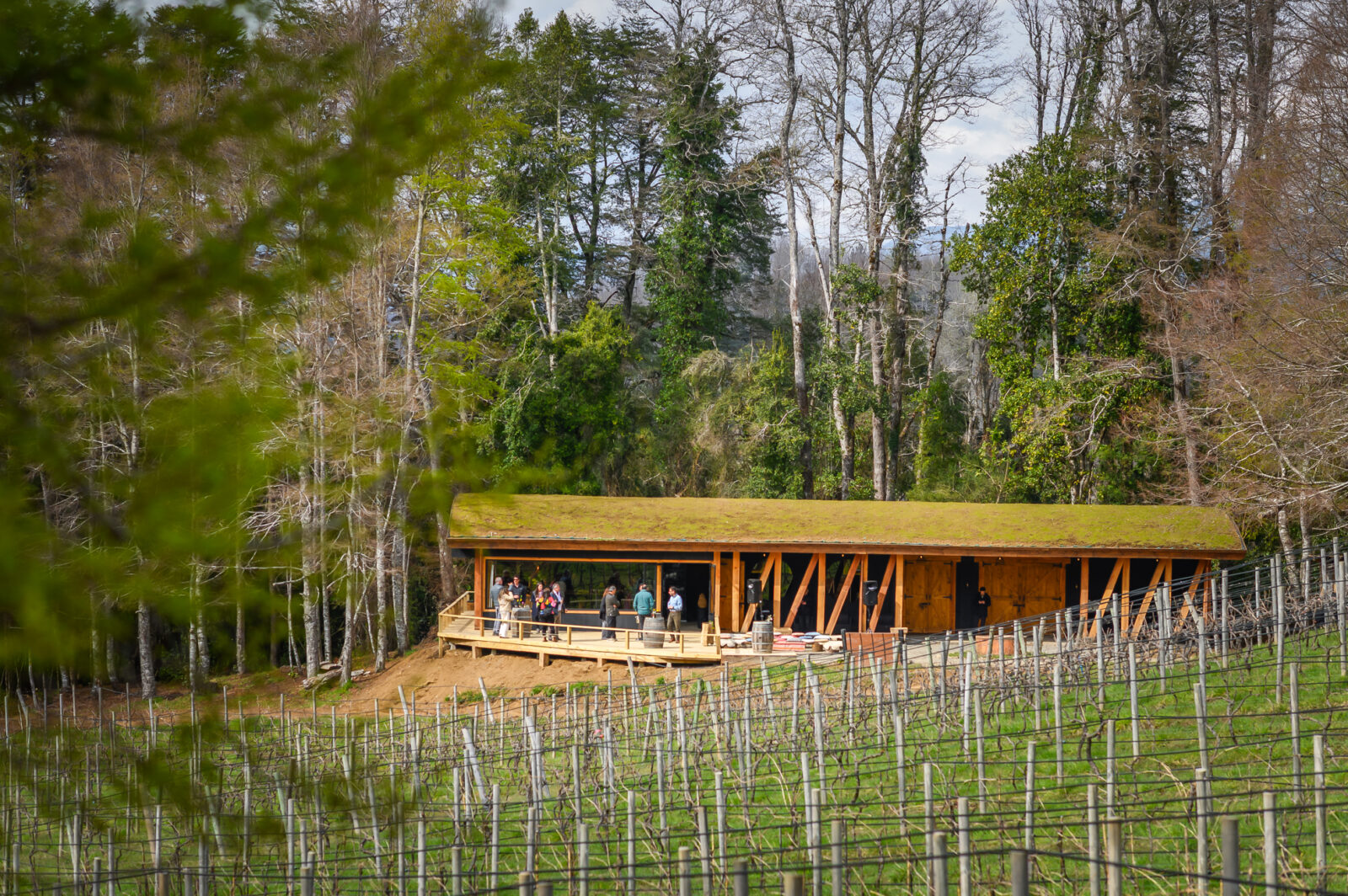
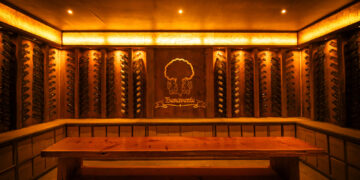
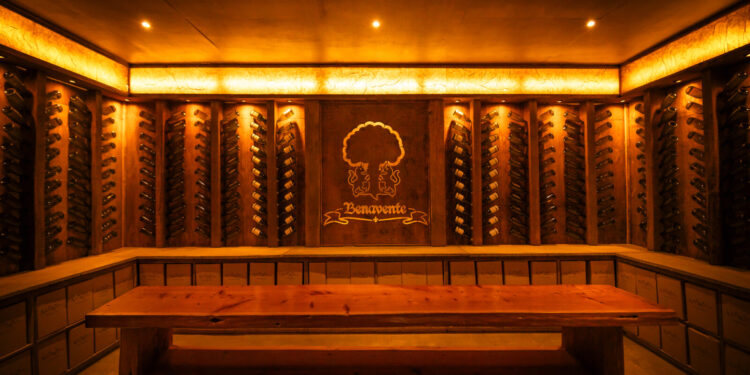
The new winery invites you to discover wines made at their source, with minimal intervention and representing the Andean Patagonia. Photo: Nick Charlesworth.

Twelve years after those initial plantings driven by Eugenio Benavente and following eight years of technical work with María Paz Valenzuela, the opening of the winery completes this major step. But not its own story.

For now, Aires de Menetúe remains a small vineyard, set within a young territory from a winemaking perspective that will continue to yield answers. However, the difference is that from now on all its processes will take place right there, in Pucón: from the vine to the bottle.

And perhaps therein lies the most interesting thing about Aires de Menetúe: not trying to replicate exactly what Chilean wine already knows how to do in other valleys, but discovering what can happen when it bravely decides make wine where there was previously nothing.


MontGras puts historic vineyards in Maipo Andes back on the map.
Tags: Aires de MenetúeAires de Menetúe Thermal ParkPucónLa Araucanía Wine Route
Cristy Álvarez

Cristy Álvarez

Cristina Álvarez G., Chilean journalist and sommelier. Since 2023 she has been president of MUV Chile, advocating for the visibility of its members, and fostering various alliances and actions focused on promoting Chilean wine culture.

Articles Related

Cocina Sustentable Chile is the new brand that identifies the sustainability certification system for gastronomy developed under the Standard Clean Production Agreement for Sustainable Gastronomy. Photo: Courtesy.
Gastronomy

Sustainable Cuisine Chile: Chilean gastronomy advances towards a common standard of sustainability

Chile Wine Fest 2026 seeks to consolidate itself as a meeting place centered on the culture of wine, bring the wine industry closer to new audiences, and promote moderate consumption. Photo provided.
News

Chile Wine Fest 2026 returns with more than 40 wineries, gastronomy, and live music

Miguel Torres Chile maintains its Gold category in the IWCA after the approval of the 2025 emission inventory. Photo: Courtesy.
News

Miguel Torres Chile maintains its Gold category from IWCA

Carmenère al Mundo is the only international wine competition focused exclusively on the emblematic variety of Chile. Photo: Ruta del Vino Curicó.
Wines

ANIAE extends entries for Carmenère to the 2026 World Championships

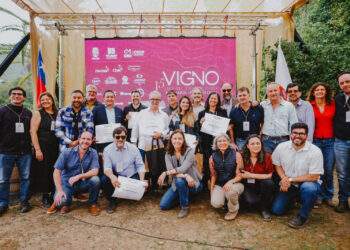
The International Seminar on Carignan “VIGNO 15 Años: From Maule to the World”, held on October 29 in Viña Gillmore, allowed to evaluate the path traveled by the association and project new challenges for the positioning of wines of origin. Photo: VIGNO.
News

VIGNO celebrates 15 years and projects the future of Carignan

“The Secret of the Flowers” invites you to discover the role that flowers play among the rows of vines and to end the day with a tasting of Ravanal wines in Colchagua. Photo: Courtesy.
Enotourism

Flowers among the straw bales: much more than just a landscape

No results
See all results

Categories

  • In-depth
  • Enotourism
    • Experiences
    • Wine Routes
  • Gastronomy
    • Spirits
    • Food pairings
    • Restaurants
    • Gastronomic Tourism
  • Events
  • Uncategorised
  • Wines
    • News
    • Features
    • Sustainability
    • Trending

Who we are

  • Log in
  • Entries feed
  • Comments feed
  • WordPress.org
From Chile to the Palate

De Chile Al Paladar celebrates wine culture, gastronomy and wine tourism, offering news, trends and reviews with a focus on the value of Chile's wine heritage and sustainability.

  • Wines
    • News
    • Features
    • Sustainability
    • Most read
  • Enotourism
    • Experiences
    • Wine Routes
  • Gastronomy
    • Restaurants
    • Food pairings
    • Spirits
    • Gastronomic Tourism
  • Events
  • Publish with us
equipo@dechilealpaladar.cl
Privacy Policy Terms and Conditions Disclaimer Biscuits Copyright
© From Chile To The Palate. All rights reserved.

Welcome back!

Sign in with Google
OR

Login to your account below

Forgot your password?

Recover your password

Please enter your username or email address to reset your password.

Log in
No results
See all results
  • Wines
    • News
    • Features
    • Sustainability
  • Enotourism
    • Experiences
    • Wine Routes
  • Gastronomy
    • Restaurants
    • Spirits
    • Food pairings
    • Gastronomic Tourism
  • Events

© 2026 River Studio Web Design.

Change language to Español de Chile

Plus her own winery, which completes the challenge of crafting her wines entirely in their place of origin.