 Wines

 Enotourism


 Gastronomy





 Events

Climate change is no longer a distant threat to winemaking. Decreasing rainfall, prolonged droughts, heatwaves, and the increasing occurrence of extreme weather events are changing the way vines are cultivated all over the world. Chile is no exception.
While for decades traditional varieties such as Cabernet Sauvignon, Carménère or Merlot dominated the national vineyards, today the industry is starting to look at new alternatives capable of responding better to the conditions imposed by the new climate.
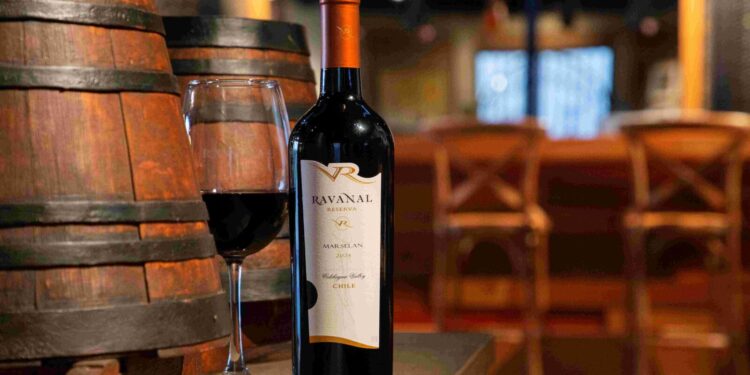
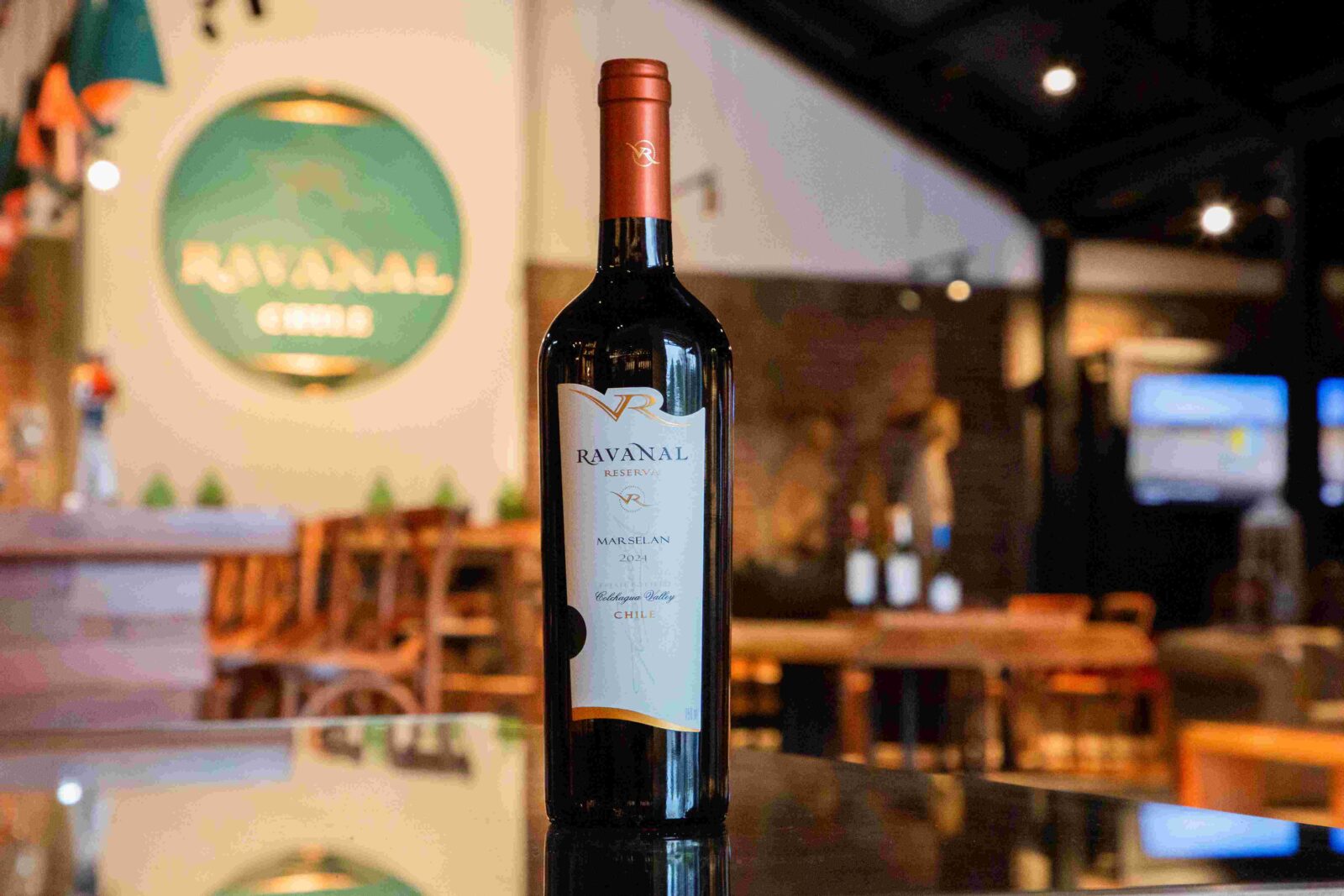
One of them is Marselan, a variety native to the south of France, created in 1961 by the National Institute for Agricultural Research (INRA) by crossing Cabernet Sauvignon and Grenache. Although for years it remained a little-known grape, it has recently sparked interest in various producing countries due to its ability to adapt to warmer and drier environments without losing oenological quality.
A strain designed for the future
In the Colchagua Valley, specifically in Ravanal Vineyard, the addition of Marselan responds precisely to that vision. The vineyard's winemaker, Héctor Saldivia, explains that the decision is not just about expanding the portfolio, but also preparing production for the challenges that viticulture is already facing.
“Marselan represents a concrete response to current challenges. It combines oenological quality with agronomic resilience, allowing viticulture to be projected towards more demanding scenarios without sacrificing identity or quality, he/she maintains.
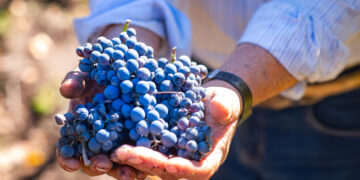
According to the specialist, one of the main strengths of this variety is its performance in the face of water stress and high temperatures. Unlike some traditional strains, Marselan features medium-sized bunches, small berries with thick skins, good fertility and lower susceptibility to disease, characteristics that make it possible to reduce phytosanitary interventions and move towards more sustainable agriculture.
In this sense, sustainability has become one of the main focuses of the global wine industry. In Chile, water scarcity is already forcing the optimisation of every litre of water used in the vineyards, while wineries are seeking to reduce their carbon footprint through more efficient processes.
For Alejandra Vinagre, Sustainability Manager at Viña Ravanal, the inclusion of Marselan is precisely part of that strategy. “Today, winemaking requires evaluating varieties that maintain high quality standards while at the same time showing a better response to higher temperature conditions, lower water availability and increasingly frequent climatic events,” she states.
The sustainability manager adds that, if this variety confirms its better climate adaptation, it could significantly reduce the environmental footprint of production. This would translate into lower water consumption, fewer applications of agricultural inputs, a reduction in energy expenditure associated with vineyard management, and more stable production in the face of extreme events.
Climate change is already altering vineyards
Various international studies have warned that global warming is displacing traditional wine-production areas and modifying grape ripening cycles. According to the Intergovernmental Panel on Climate Change (IPCC), the sustained increase in temperatures will heighten water stress in numerous wine-growing regions over the coming decades.
In Chile, the effects are already visible. “The decrease in water availability, the sustained rise in temperatures, heatwaves and the increased risk of forest fires are today some of the main challenges for wine production,” notes Vinagre.
Facing this scenario, Viña Ravanal has strengthened practices such as the efficient use of water resources, responsible soil management, biodiversity conservation, energy efficiency, and comprehensive waste management, all aligned with the Sustainability Code of Wines of Chile.
Initial assessments carried out by the winery show significant differences compared to traditional varieties. According to its winemaker Héctor Saldivia, in high-temperature seasons, Marselan maintains a more even ripening process, retains acidity better and makes more efficient use of available water.
“While some varieties may present early wilting, loss of acidity or fruit imbalances, Marselan maintains a more stable vegetative-productive balance,” explains Saldivia. Furthermore, its lower susceptibility to diseases reduces the need for phytosanitary treatments and facilitates vineyard management, lowering both costs and environmental impact.
Innovating without losing identity
Although Marselan still represents a small area within Chilean viticulture, specialists believe that it could become one of the relevant varieties over the coming decades. Not because it will replace traditional grape varieties, but because it complements an adaptation strategy that allows the industry to maintain its competitiveness in the face of climate change.
“Sustainability will depend increasingly on combining better adapted varieties, precision technologies and good agricultural practices. Marselan can form part of that transition towards a more prepared, competitive and responsible viticulture, Vinagre concludes.
For Saldivia, the message is equally clear: “Marselan is not a passing fad; it is a technical and concrete response to current challenges. The future of wine will lie in the ability to innovate without losing identity, and this grape variety represents precisely that vision,” he emphasises.
In an industry where tradition has historically been a hallmark, innovation is beginning to become a necessity. And in that new scenario, Marselan could symbolise much more than just a new variety: the beginning of a viticulture designed to coexist with the climate of the future.