De Chile al Paladar | Wine News & Trends in Chile
No results
See all results
  • Wines
    • Wines
    • News
    • Features
    • Sustainability
    • Most read
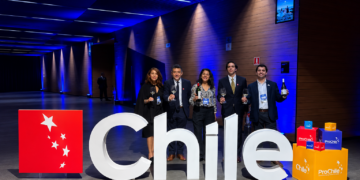
    Chile Wine Fest 2026 seeks to consolidate itself as a meeting place centered on the culture of wine, bring the wine industry closer to new audiences, and promote moderate consumption. Photo provided.
    News

    Chile Wine Fest 2026: more than 40 wineries, gastronomy and live music

    Miguel Torres Chile maintains its Gold category in the IWCA after the approval of the 2025 emission inventory. Photo: Courtesy.
    News

    Miguel Torres Chile maintains its Gold category from IWCA

    Carmenère al Mundo is the only international wine competition focused exclusively on the emblematic variety of Chile. Photo: Ruta del Vino Curicó.
    Wines

    ANIAE extends entries for Carmenère to the 2026 World Championships

  • Enotourism
    • Enotourism
    • Experiences
    • Wine Routes
    “The Secret of the Flowers” invites you to discover the role that flowers play among the rows of vines and to end the day with a tasting of Ravanal wines in Colchagua. Photo: Courtesy.
    Enotourism

    Flowers among the straw bales: much more than just a landscape

    Casas del Bosque is strengthening its international strategy as a way to transform every visit into a memorable experience in the Casablanca Valley. Photo: Supplied.
    Enotourism

    Casas del Bosque reinforces positioning in Brazil with wines and wine tourism

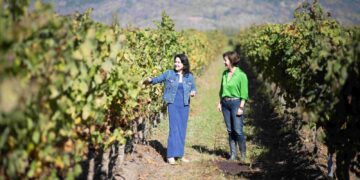
    Women are protagonists in an industry that is starting to have a different face and is also changing the way Chilean wine is understood. Photo: Viña Ravanal.
    Enotourism

    The new face of Chilean wine: women transforming the industry

  • Gastronomy
    • Gastronomy
    • Restaurants
    • Food pairings
    • Spirits
    • Gastronomic Tourism
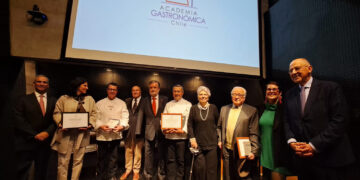
    The Gastronomic Academy of Chile awarded three awards in the categories of Contribution to Chilean Gastronomic Culture, Personal Achievement and Contribution, and Research, Education and Promotion of Gastronomy. Photo: Courtesy.
    Gastronomy

    The Gastronomic Academy of Chile honors three national culinary icons

    Encuentro Quesos opens registration for the Level 1 CheeseMonger Training Programme, which is coming to Chile for the first time.
    Experiences

    CheeseMonger Programme: international certification arrives in Chile

    Mitjans launches its Pistachio Liqueur in Chile, reinforcing its leadership in the sweet liqueurs category. Photo: Supplied.
    Spirits

    Mitjans innovates in flavours and launches its Pistachio Liqueur

  • In-depth
    • In-depth
    Aires de Menetúe: eight years of trials, climatic challenges and decisions made on the fly have shaped one of southern winemaking's most unique projects. Photo: Nick Charlesworth.
    In-depth

    Aires de Menetúe: making wine where there was none before

    Producers from Hualqui, Nacimiento, Los Ángeles, Laja, San Rosendo, Santa Juana and Tomé will be able to identify their wines under the Secano Interior PDO. Photo: Nick Charlesworth.
    In-depth

    Biobío extends DOE Dry Interior and incorporates seven communes

    A Liv-ex report, the London fine wine exchange, published in mid-July, shows the sector's main indices indicating a stabilisation during the first half of 2026. Photo: Nick Charlesworth.
    In-depth

    Why the Fine Wine Market Stopped Falling in 2026

  • Events
  • Log in
De Chile al Paladar | Wine News & Trends in Chile
  • Wines
    • Wines
    • News
    • Features
    • Sustainability
    • Most read
    Chile Wine Fest 2026 seeks to consolidate itself as a meeting place centered on the culture of wine, bring the wine industry closer to new audiences, and promote moderate consumption. Photo provided.
    News

    Chile Wine Fest 2026: more than 40 wineries, gastronomy and live music

    Miguel Torres Chile maintains its Gold category in the IWCA after the approval of the 2025 emission inventory. Photo: Courtesy.
    News

    Miguel Torres Chile maintains its Gold category from IWCA

    Carmenère al Mundo is the only international wine competition focused exclusively on the emblematic variety of Chile. Photo: Ruta del Vino Curicó.
    Wines

    ANIAE extends entries for Carmenère to the 2026 World Championships

  • Enotourism
    • Enotourism
    • Experiences
    • Wine Routes
    “The Secret of the Flowers” invites you to discover the role that flowers play among the rows of vines and to end the day with a tasting of Ravanal wines in Colchagua. Photo: Courtesy.
    Enotourism

    Flowers among the straw bales: much more than just a landscape

    Casas del Bosque is strengthening its international strategy as a way to transform every visit into a memorable experience in the Casablanca Valley. Photo: Supplied.
    Enotourism

    Casas del Bosque reinforces positioning in Brazil with wines and wine tourism

    Women are protagonists in an industry that is starting to have a different face and is also changing the way Chilean wine is understood. Photo: Viña Ravanal.
    Enotourism

    The new face of Chilean wine: women transforming the industry

  • Gastronomy
    • Gastronomy
    • Restaurants
    • Food pairings
    • Spirits
    • Gastronomic Tourism
    The Gastronomic Academy of Chile awarded three awards in the categories of Contribution to Chilean Gastronomic Culture, Personal Achievement and Contribution, and Research, Education and Promotion of Gastronomy. Photo: Courtesy.
    Gastronomy

    The Gastronomic Academy of Chile honors three national culinary icons

    Encuentro Quesos opens registration for the Level 1 CheeseMonger Training Programme, which is coming to Chile for the first time.
    Experiences

    CheeseMonger Programme: international certification arrives in Chile

    Mitjans launches its Pistachio Liqueur in Chile, reinforcing its leadership in the sweet liqueurs category. Photo: Supplied.
    Spirits

    Mitjans innovates in flavours and launches its Pistachio Liqueur

  • In-depth
    • In-depth
    Aires de Menetúe: eight years of trials, climatic challenges and decisions made on the fly have shaped one of southern winemaking's most unique projects. Photo: Nick Charlesworth.
    In-depth

    Aires de Menetúe: making wine where there was none before

    Producers from Hualqui, Nacimiento, Los Ángeles, Laja, San Rosendo, Santa Juana and Tomé will be able to identify their wines under the Secano Interior PDO. Photo: Nick Charlesworth.
    In-depth

    Biobío extends DOE Dry Interior and incorporates seven communes

    A Liv-ex report, the London fine wine exchange, published in mid-July, shows the sector's main indices indicating a stabilisation during the first half of 2026. Photo: Nick Charlesworth.
    In-depth

    Why the Fine Wine Market Stopped Falling in 2026

  • Events
No results
See all results
De Chile al Paladar | Wine News & Trends in Chile
No results
See all results
  • Wines
  • Enotourism
  • Gastronomy
  • Events
Home Wines News

The new history of Chilean wine is being written in Los Lagos

Whilst climate change redefines the global wine map, the Los Lagos Region is advancing in the construction of its own identity for its cool-climate wines. Science, collaboration and territory are the basis of a new project that seeks to open a new chapter for national winemaking.

Cristy Álvarez By Cristy Álvarez
05/08/2026
At News, Features, Wines
Reading time: 7 minutos
A A
0
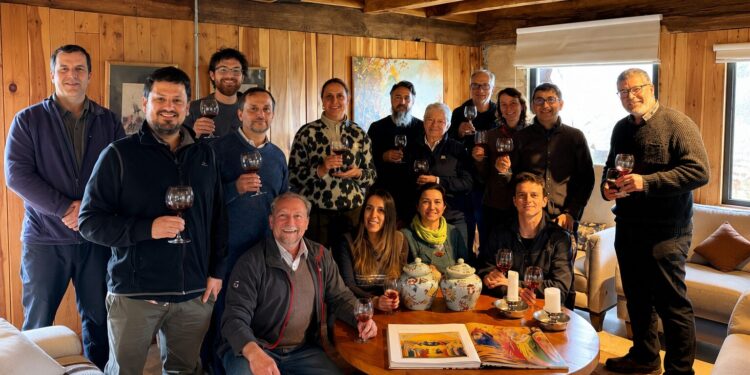
Group of adults posing in a wood-paneled living room, each holding a wine glass as they toast around a coffee table with a cookbook and ceramic jars.

The VITIS Los Lagos Association, an organisation bringing together producers in southern Chile with the aim of strengthening regional winemaking and positioning the identity of its wines. Photo: Supplied.

Share on FacebookShare on Linkedin

For decades, when Chilean wine was talked about, the focus was primarily on the valleys of the central zone.

Today, much further south, a new wine-making proposition is beginning to establish itself amongst volcanoes, lakes, native forests and abundant rainfall, determined to look like no other.

We are talking about the nascent spring Winegrowers' Association of the Los Lagos Region – VITIS Los Lagos, a community that brings together producers, researchers and specialists who share a common goal: to demonstrate that the deep south can also produce wines with their own identity.

And what is needed to create a new wine region?

For the members of VITIS Los Lagos, the answer goes far beyond planting vineyards. It involves generating scientific knowledge, working collaboratively and understanding a region that until a few years ago did not feature on the country's viticulture map.

At From Chile to the Palate we spoke with its chief executive, Sandra Ríos, regarding the challenges of establishing a new wine region, the potential of the cool climate, and the vision it projects for Los Lagos as one of the most promising territories for the future of national wine.


The VITIS Los Lagos Association brings together producers from various fields, such as agriculture, livestock farming, salmon farming and even research. How did this collaborative project come about, and what led you to choose wine as a new expression of the terroir?

VITIS Los Lagos was born from a shared conviction: southern Chile possesses unique conditions for developing winemaking with its own distinct identity. Those of us who make up the association today come from very diverse backgrounds, but we all shared the same desire: to demonstrate that wine could become a new expression of the southern territory.

Here, wine does not end up replacing traditional activities. On the contrary, it coexists with livestock farming, agriculture, forests and the natural wealth that characterises the region. We believe that true innovation consists precisely in integrating those activities and building a new value chain based on the landscape, science and collaboration.

The awarding of the FIA project in 2024 allowed us to transform that vision into a systematic work process, incorporating scientific research, excellent technical consultancy and open innovation to generate knowledge adapted to cold climate conditions.
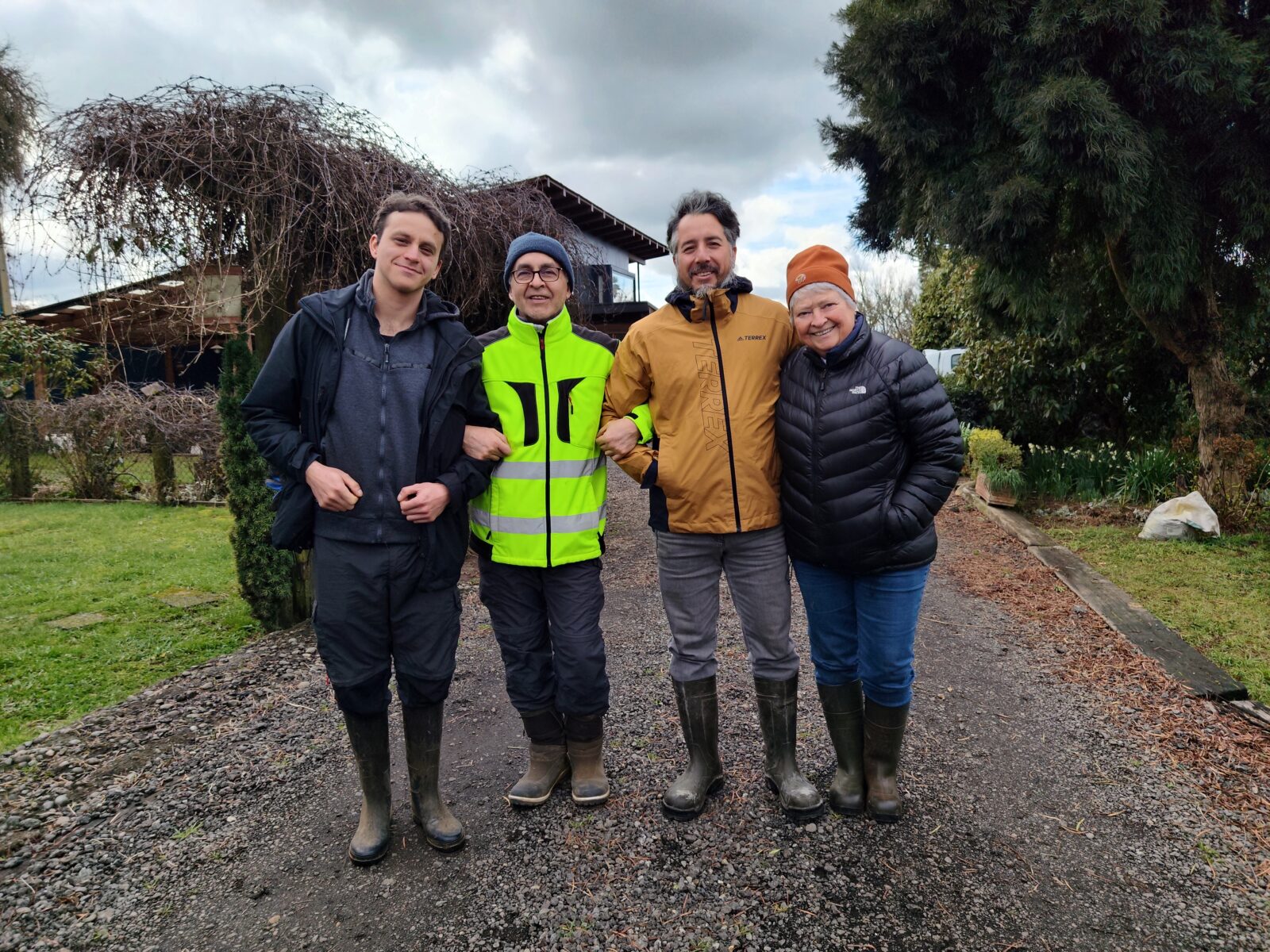
VITIS Los Lagos currently brings together eight wineries and 16 partners belonging to the Los Lagos Region, promoting the development of winegrowing adapted to the south of Chile. Photo: Supplied.

Today the association brings together producers distributed across the Llanquihue basin, the Osorno Valley, San Juan de la Costa and areas near the Reloncaví Estuary. What unites these winegrowers and what is the common purpose that drives them as an association?

What unites us is much more than producing wine. We are united by the challenge of building a new winemaking industry for Chile from a region that has not historically been considered wine-growing. Each vineyard has distinct characteristics, but all face similar challenges associated with cold climate, grape ripening and the building of identity.

Our shared purpose is to generate collective knowledge, reduce uncertainty for future producers and position the Los Lagos Region as an international benchmark for cool-climate wines, demonstrating that cooperation can be transformed into a genuine competitive advantage.


The seal of the southern wines

What characteristics make the wines from the Los Lagos Region unique? How do the cold climate, soils and southern landscape influence the identity of these productions?

Our wines are the result of one of the southernmost wine-growing regions in the world. The low temperatures naturally prolong the ripening of the grapes, preserving their acidity, encouraging very elegant aromatic profiles and delivering fresh, precise wines with great balance. Added to this is the influence of volcanic soils, abundant water, the proximity of lakes and oceans, native forests and exceptional biodiversity that make up an impossible-to-replicatelandscape. We do not seek to reproduce the style of other regions of the world. We want to build the unique identity of southern Chilean wines, where the land is the main protagonist.
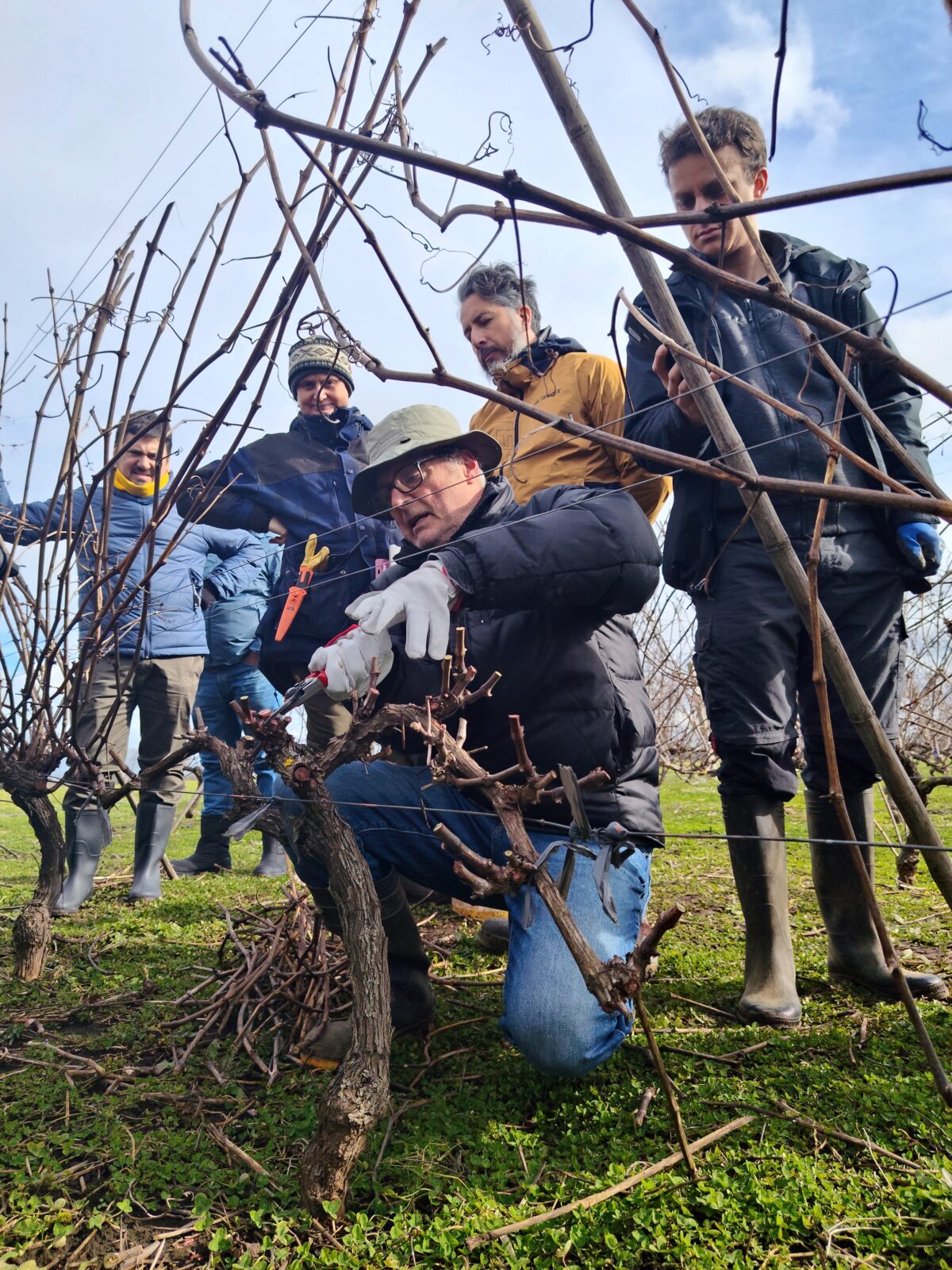
Pruning workshop held in July 2026, with the participation of small-scale producers from Vitis Los Lagos. Photo: Supplied.

Chile is internationally recognised for its wine valleys in the more central regions. What has it meant to forge a path from an emerging territory like Los Lagos, and what have been the main challenges in positioning it on the map of Chilean wine?

Paving the way always involves challenging paradigms. For decades, Chilean winemaking was concentrated in the central valleys of the country. We are demonstrating that there are new opportunities much further south. The main challenge has been generating technical knowledge where practically no references existed, validating varieties, developing specific management practices for a cold climate and building credibility in an industry accustomed to other production conditions.

Today, however, climate change is altering the global geography of wine and regions like Los Lagos are beginning to be seen as part of the viticulture of the future.


Science, collaboration and territory

Collaborative working seems to be one of the hallmarks of VITIS Los Lagos. What role have cooperation among producers, academia and innovation played in the development and consolidation of this new wine region?

Cooperation has been at the heart of the project. Right from the start, we understood that no producer could walk this path individually. That is why we decided to build an open innovation model where producers, universities, researchers, specialists and public bodies worked as a single learning community. This model made it possible to carry out the first collective winemaking in the far south of Chile in April of this year, share technical knowledge, reduce risks and accelerate joint learning.

We strongly believe that major territorial challenges can only be resolved through collaboration.

Beyond wine production, what potential do you see for the development of wine tourism in the Los Lagos Region? What experiences do you think will be able to be offered to those who want to discover this territory through wine?

The potential is enormous because the wine comes to complement a region that already possesses international recognition for its landscapes, volcanoes, lakes, national parks and gastronomy. Our proposal does not consist solely of visiting a vineyard.

We want to offer experiences where visitors can understand how a wine is born among livestock pastures, native forests, rain, volcanoes and rural communities. It is a different way of getting to know the south of Chile, where wine becomes a gateway to understanding the land and its culture.


The future of wine is being written from the south

Climate change is transforming winemaking across the globe. What opportunities does this scenario open up for southern regions like Los Lagos, and what role do you think they will play in the future of Chilean wine?

Climate change represents one of the greatest challenges for global winemaking, but it also opens up opportunities for southern territories like ours.

Whilst many traditional regions face rising temperatures and a loss of freshness in their wines, the south offers conditions that favour slower, more balanced ripening.

We don't believe the south is going to replace the traditional valleys. What it will do is broaden the diversity of Chilean wine, incorporating new styles, new landscapes and new ways of understanding winemaking.
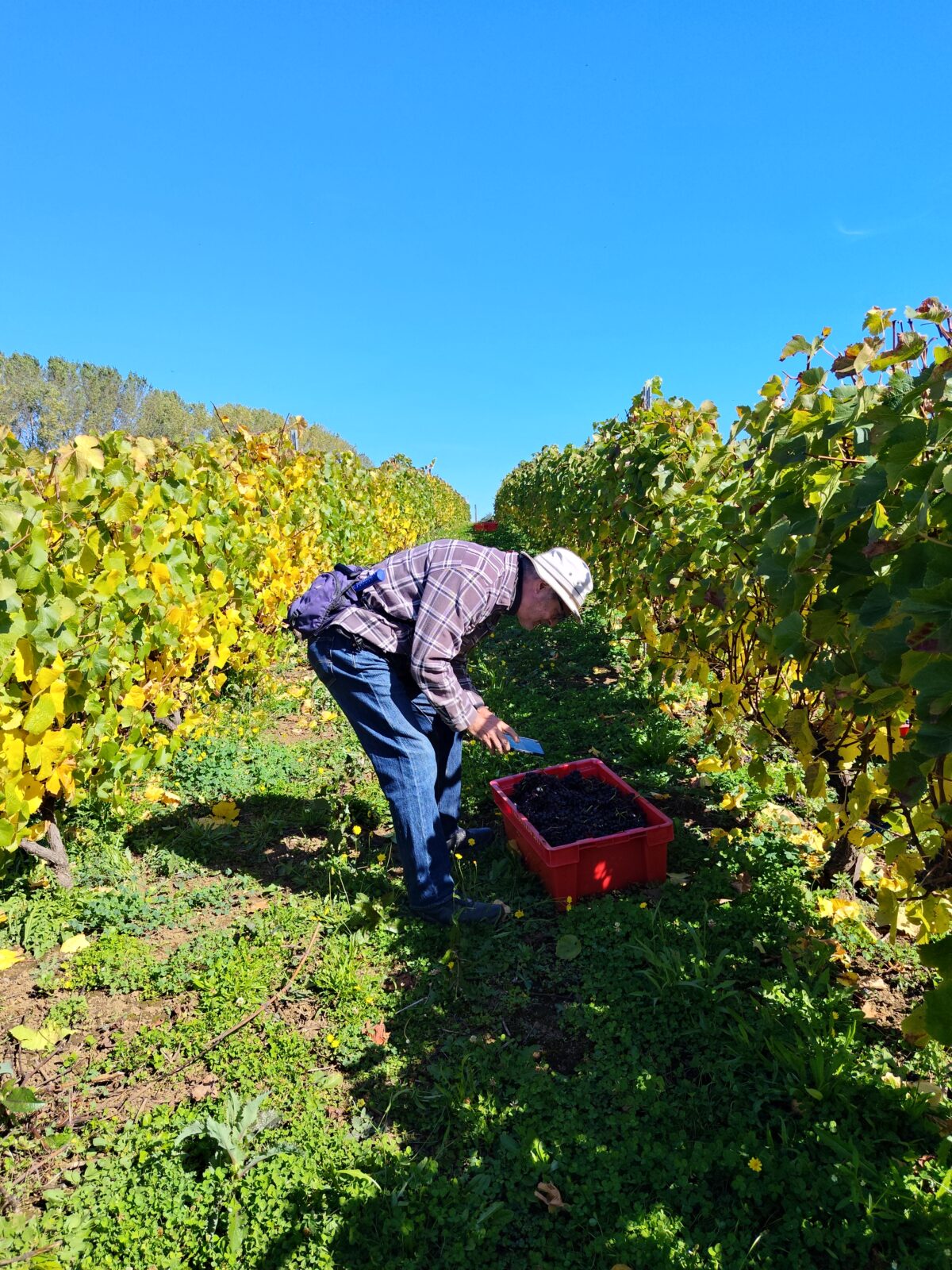
Collaboration among producers, knowledge sharing and working together are today one of the main drivers of the development of winemaking in southern Chile. Photo: Provided.

We know you are promoting new instances of collaboration with producers from the Los Ríos Region. What does this joint work consist of and what impact do you expect it to have on the development of winemaking in the far south of Chile?

Wine territories do not recognise administrative boundaries. The Los Ríos and Los Lagos regions share climatic conditions, production challenges and a common history that allow winemaking to be thought of as a larger-scale territorial project. We are strengthening collaborative networks between vineyards to generate joint knowledge, share experiences and consolidate a true cool-climate winemaking hub in the far south of Chile.

We have already worked together with Viña Trapi del Bueno, Couteaux de Trumao, Riñihue, and we are beginning to forge ties with Viña Rebellín. We firmly believe that the future lies in building networks rather than competing between regions; it is about creating cooperative economies where economic efficiencies are generated through the shared use of resources and materials for grape growing and the production of cool-climate wines.

Both regions belong to the DO Región Austral, and what remains to be worked on is the typicality of the different valleys. So far we only have the Osorno and Chiloé Valleys.

In addition to this, what are the upcoming challenges and projections for VITIS Los Lagos? What would you like the public, the industry and wine lovers to know and appreciate about this project in the coming years?

Our main challenge is to consolidate a sustainable, scientific winemaking industry that is deeply tied to the land. We want to continue developing applied research, strengthen collaborative work, advance new innovation projects, promote wine tourism, and present our first collective wines as an authentic expression of the southern cool climate.

We would like wine consumers to understand that behind every bottle there is much more than just a wine: there is a territory, a community, a process of collective learning and a vision for development for the southern austral region of Chile.

Ultimately, what role do you think the far south will play in Chile's growing wine map?

I am convinced that the future of Chilean wine will be much more territorially diverse.

Just as Casablanca transformed the way coastal wines were understood a few decades ago, we believe that the far south can represent the next great stage of national winemaking.

Our aspiration is not to produce more wine. Our aspiration is to produce wines that can only be born here. Wines that express the cool climate, the rain, the volcanic soils, the biodiversity and the identity of a unique terroir. In short, wines capable of telling the story of southern Chile in every glass. DCAP


The value of being recognised in the Carmenère al Mundo Competition.
Tags: Los Lagos RegionOn AustralSouthern WinesVitis Los Lagos
Cristy Álvarez

Cristy Álvarez

Cristina Álvarez G., Chilean journalist and sommelier. Since 2023 she has been president of MUV Chile, advocating for the visibility of its members, and fostering various alliances and actions focused on promoting Chilean wine culture.

Articles Related

Private Viognier 2025 from the Valle Secreto vineyard expresses its origin from the Andes Mountains, on the Los Maquis road, located in the Malloa commune, in the Cachapoal Valley. Photo: Courtesy.
Enotourism

Viña Valle Secreto launches Private Viognier 2025

Cocina Sustentable Chile is the new brand that identifies the sustainability certification system for gastronomy developed under the Standard Clean Production Agreement for Sustainable Gastronomy. Photo: Courtesy.
Gastronomy

Chilean gastronomy advances towards a common standard of sustainability

Chile Wine Fest 2026 seeks to consolidate itself as a meeting place centered on the culture of wine, bring the wine industry closer to new audiences, and promote moderate consumption. Photo provided.
News

Chile Wine Fest 2026: more than 40 wineries, gastronomy and live music

Miguel Torres Chile maintains its Gold category in the IWCA after the approval of the 2025 emission inventory. Photo: Courtesy.
News

Miguel Torres Chile maintains its Gold category from IWCA

Carmenère al Mundo is the only international wine competition focused exclusively on the emblematic variety of Chile. Photo: Ruta del Vino Curicó.
Wines

ANIAE extends entries for Carmenère to the 2026 World Championships

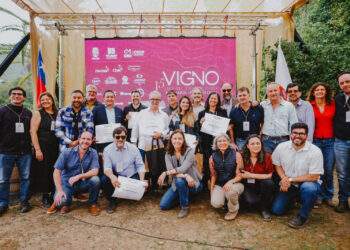
The International Seminar on Carignan “VIGNO 15 Años: From Maule to the World”, held on October 29 in Viña Gillmore, allowed to evaluate the path traveled by the association and project new challenges for the positioning of wines of origin. Photo: VIGNO.
News

VIGNO celebrates 15 years and projects the future of Carignan

No results
See all results

Categories

  • In-depth
  • Enotourism
    • Experiences
    • Wine Routes
  • Gastronomy
    • Spirits
    • Food pairings
    • Restaurants
    • Gastronomic Tourism
  • Events
  • Uncategorised
  • Wines
    • News
    • Features
    • Sustainability
    • Trending

Who we are

  • Log in
  • Entries feed
  • Comments feed
  • WordPress.org
From Chile to the Palate

De Chile Al Paladar celebrates wine culture, gastronomy and wine tourism, offering news, trends and reviews with a focus on the value of Chile's wine heritage and sustainability.

  • Wines
    • News
    • Features
    • Sustainability
    • Most read
  • Enotourism
    • Experiences
    • Wine Routes
  • Gastronomy
    • Restaurants
    • Food pairings
    • Spirits
    • Gastronomic Tourism
  • Events
  • Publish with us
equipo@dechilealpaladar.cl
Privacy Policy Terms and Conditions Disclaimer Biscuits Copyright
© From Chile To The Palate. All rights reserved.

Welcome back!

Sign in with Google
OR

Login to your account below

Forgot your password?

Recover your password

Please enter your username or email address to reset your password.

Log in
No results
See all results
  • Wines
    • News
    • Features
    • Sustainability
  • Enotourism
    • Experiences
    • Wine Routes
  • Gastronomy
    • Restaurants
    • Spirits
    • Food pairings
    • Gastronomic Tourism
  • Events

© 2026 River Studio Web Design.

Change language to Español de Chile