 Wines


 Enotourism



 Gastronomy




 Events


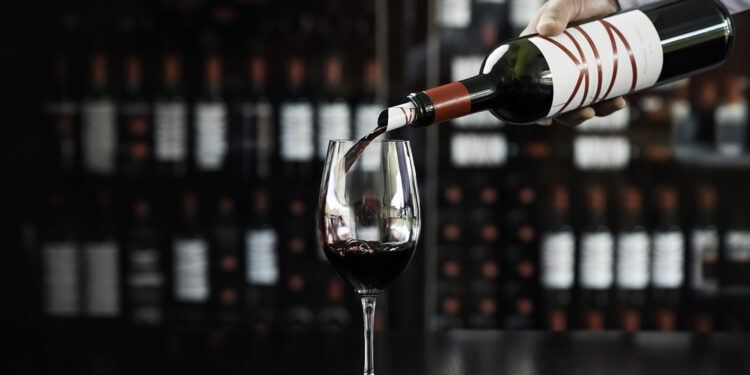
After two years of falls, the major fine wine indices stopped declining in 2026, supported by US buyers willing to pay above market price.
Calm is fragile, but it leaves a lesson for those cellaring bottles in Chile: older vintages are outperforming new releases.
Anyone who follows the international wine market knows that the last few years have been an uphill battle. Great Bordeaux, cult Burgundies, and also Chilean icons sold through the same channels have seen their prices cool on the secondary market, amidst US tariffs and increasingly cautious buyers. This is the universe of fine wine: bottles with ageing potential that collectors and merchants buy and resell, a world away from the supermarket shelf.
That cycle appears to be hitting rock bottom. According to the most recent report from Liv-ex, the London Fine Wine Exchange, published in mid-July, the sector’s main indices stabilised during the first half of 2026. The Fine Wine 100, its benchmark index, has risen by 2.7% over the past twelve months – a figure that seemed a distant prospect just a year ago.
The calm, mind you, comes with nuances. “The current fine wine market outlook is far from straightforward,” the document reads. Beneath the surface of flat indices, brands and vintages that are rising coexist with others that continue to lose ground.
A calm with small print
The Fine Wine 1000, an index that tracks the prices of a thousand wines from different regions around the world, illustrates this well. In the second quarter, more vintages fell in price than rose; the net result was positive only because the increases, averaging 5.2%, outweighed the falls, which averaged 4.1%.
Price stability has not yet translated into increased movement either. Trade remains relatively subdued and merchants are operating defensively, without buying to build up stock. Faced with this scenario, Liv-ex suggests that private collectors are called upon to move the market.
That's where the geopolitical factor weighs in. Any threat to those collectors' wealth hits sales directly, the report warns. And the fragility of the peace agreement following the Iran war, with the inflationary pressure it could revive, was at the time of the report's closure one more concern on the table.
The return of the US buyer
If anything is sustaining the recovery, it is the United States. Its buyers accounted for more than a quarter of global purchasing value in the second quarter, well above their average for last year, and they are the only purchasing market that has increased its acquisitions so far this year.
For Liv-ex, it was only a matter of time: the US distribution chain has been learning to live with tariffs, and accumulated inventories are running out naturally.
There is one detail that matters just as much as volume. Americans paid, on average, 1.1% above the market price for wines in the Fine Wine 1000, whereas at the start of the year they were buying at virtually the reference price. They aren’t out hunting for bargains: they are validating current prices, and that is precisely what is setting a floor for them.
Asia, on the other hand, has been sidelined. Local prices continue to fall, with large-scale informal sales, and shipping costs rose by as much as 60% in some cases following the outbreak of the war in Iran, which has directly curbed purchasing.
The revenge of the old vintages
The other big message from the report is the gap between vintages. Bordeaux is the classic case: with the exception of the young 2022s, its wines from before 2017 have tended to hold up better and find their floor sooner than recent harvests.
The latest En Primeur campaign, the traditional Bordeaux futures selling system, confirmed this. Although it once again dominated the quarter's movement, it weighs much less on revenues than it used to, and for the surveyed British merchants, sales remained more or less at last year's level.
The releases that worked shared a formula: coming out at a lower price than all previous vintages of comparable quality, just when those vintages were showing stability or increases. Lafite, one of the successes of the campaign, illustrates this: each of its best vintages after 2014 has risen steadily since the beginning of the year.
The lesson extends beyond Bordeaux: when bottles with a history appreciate in value, they not only reward the person who stored them; they also underpin the price of new vintages.
What is at stake for Chile
Chile does not appear with figures in this report, but the market it describes is the same one where our icons are resold, from Almaviva to Seña, distributed by La Place de Bordeaux alongside the world's great wines. A stabilised secondary market, with active US buyers, is a better showcase for the most ambitious category of Chilean wine.
For the local enthusiast, the moral is more domestic: the patience of cellaring pays off once again. In a market that rewards mature vintages over new releases, that well-kept case takes on a new meaning.
“It remains a market overwhelmingly defined by caution, but for astute buyers there are reasons to consider it a time of quiet opportunity,” concludes the report. With an eye on the second half of the year, the question is whether that fragile calm will be enough to turn into confidence.